





BHIMDATTA: In a bid to increase the number of tourists, the Suklaphanta tourism festival kicked off today at the Suklaphanta National Park.
Organized by the Bhimdatta Municipality in collaboration with the National Park, the week-long festival is expected to promote the national park as well as increase the number of visitors.
Chief of the Municipality, Surendra Bista informed that the park is like an open university where once can find and explore diversity. He added that they are also planning to construct Suklaphanta Tourism route, bridges, park and Rana Tharu home stays.
According to him, the festival is also aimed at supporting the government’s initiative of Visit Nepal 2020 campaign.
The Bhimdatta Municipality has announced year 2019 as the year of Promotion and Infrastructures.
KATHMANDU: Kathmandu has been placed in the 19th position out of 25 best-rated destinations in the world, according to TripAdvisor’s annual Travelers’ choice.
The winners were determined based on algorithm that analyses the millions of reviews and ratings for hotels, restaurants and attractions collected in a single year from TripAdvisor travelers worldwide.
London bags the first spot this year, followed by Paris while Rome comes third in line among top-rated holiday destinations.
Trip adviser’s top-rated holiday destinations
1. London
2. Paris
3. Rome
4. Crete
5. Bali
6. Phuket
7. Barcelona
8. Istanbul
9. Marrakech
10. Dubai
11. Prague
12. Siem Reap
13. New York City
14. Jamaica
15. Hanoi
16. Tokyo
17. Playa del Carmen
18. Lisbon
19. Kathmandu
20. Jaipur
21. Hurghada
22. Hong Kong
23. Cusco
24. Sydney
25. Tel Aviv
MANANG: A significant number of tourists have increased in Manang district of Nepal of late. Most of the hotels are chock-a-block after a significant rise in tourists in recent days.
According to the Nepal Tourism Board (NTB), a total of 124,421 visitors visited Nepal in February, which was 39 per cent more than the same month last year. Similarly, 97,694 international visitors came by air while 26,727 came overland.
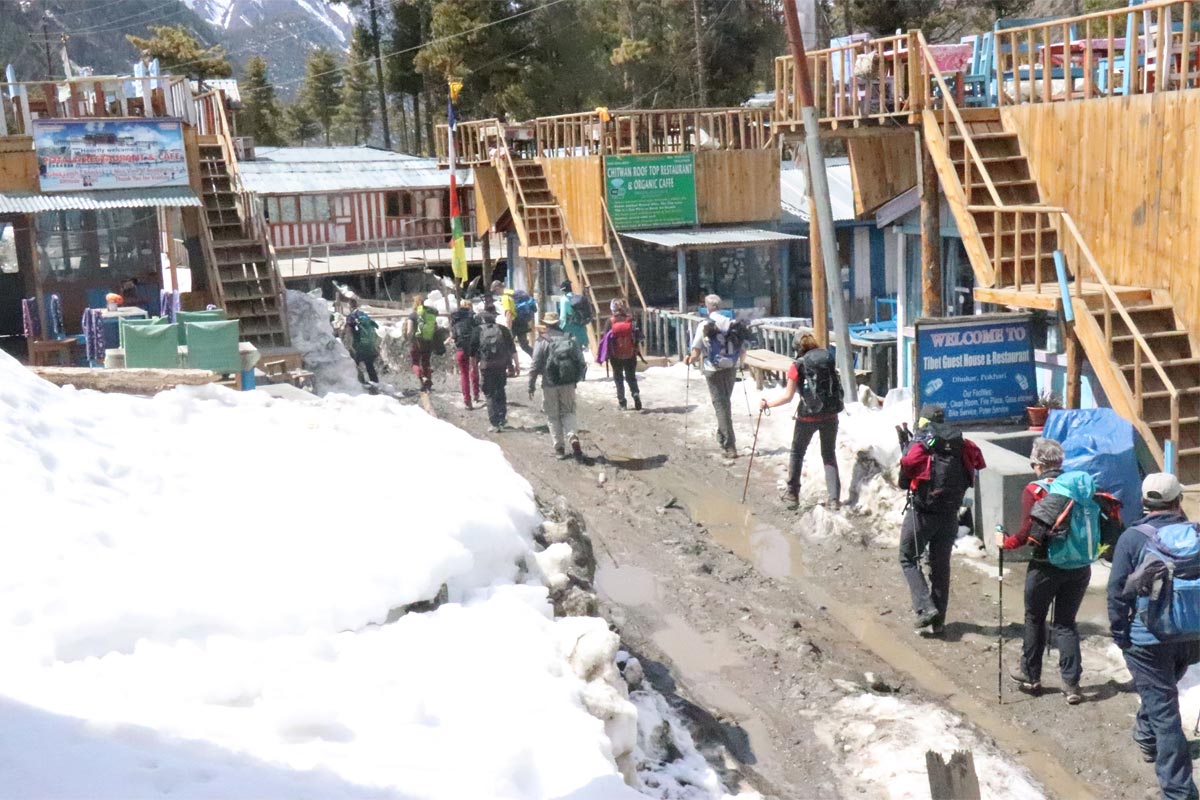
Furthermore, 16,205 Chinese tourists, 14,571 Indian, 14,831 Sri Lankan, 5,268 English, 3,340 German, 1978, French, 2,978 Australian visited Nepal in February.
Manaslu Base Camp, 4800m, trek has always been a fascinating route for trekkers and climbers. Also dubbed as an untouched paradise, it has been one of the most popular trekking destinations in Nepal.
Officially opened in 1992, the base camp route is considered as an adventure trek for travelers.
In fact, Manaslu trek offers an absolute view of the mountain peaks, rich cultural heritage, breathtaking panorama as well as rural civilization. To add more, it has an incomparable beauty blended with the natural assortment.
The majestic Mt. Manaslu, 8163m, which is one of the eight tallest mountains in the world, stands tall with its name “The Spirit-Mountain” in the local language.
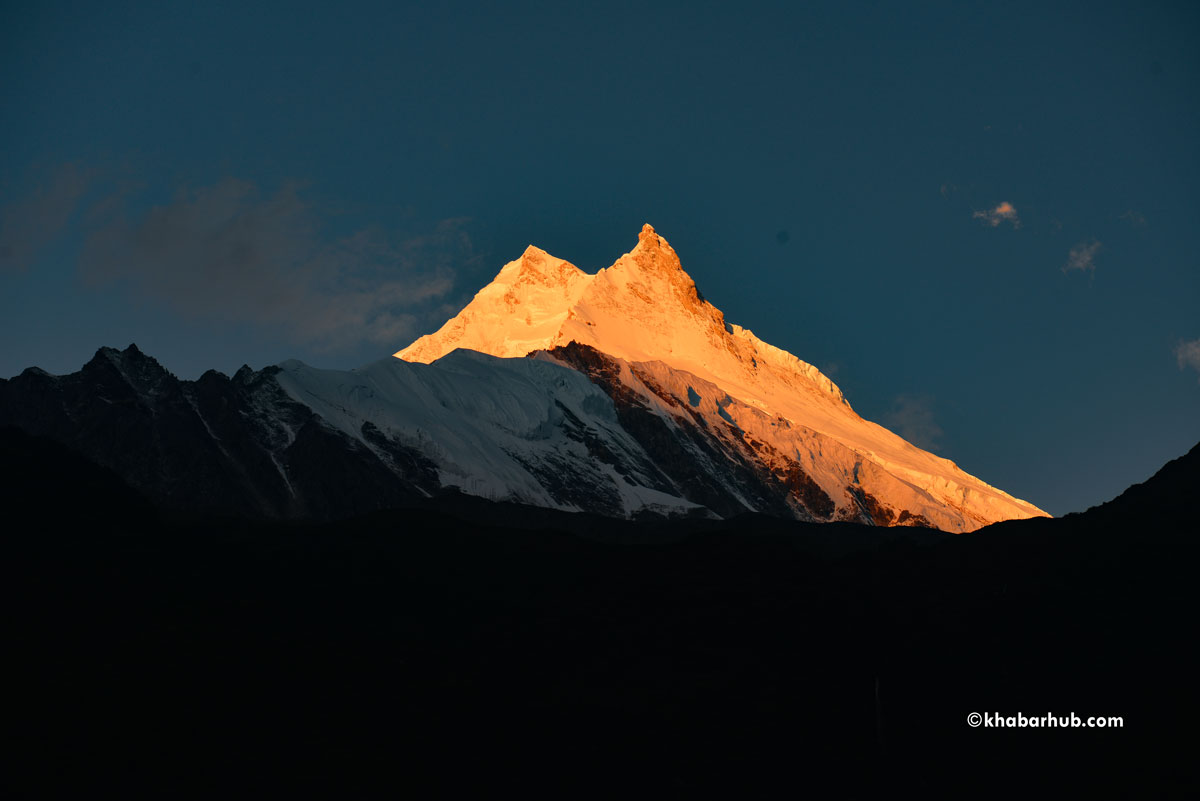
The sunrise view of Mt. Manaslu Main 8163m (L) and East pinnacle 7992m (L), seen from the renowned village Samagoan (3520m) of Gorkha.
Trek to the Manaslu Base Camp can be a blend of an unforgettable experience and wonderful adventure.
Trek to the Manaslu Base Camp begins from Sotikhola Bazar to Budhi Gandaki passing through steep yet picturesque valleys.
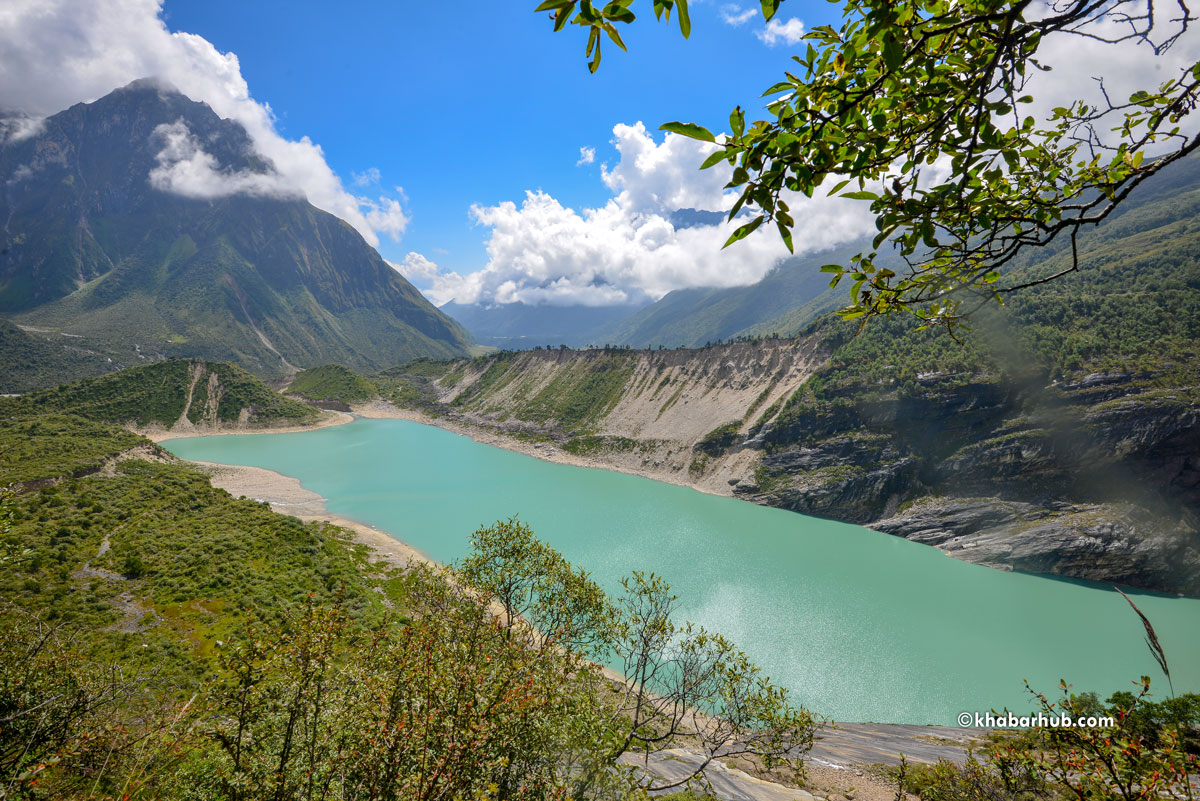
Magnificent view of Birendra Tal seen on the way to the Manalsu Base Camp.
The Manaslu base camp trek begins from Kathmandu to Arughat in Gorkha district. The 18-day trek will lead a traveler through the banks of the Budi Gandaki River passing through scenic valleys, green hills, ridges, jungles, prayer flags, Buddhist monasteries, typical villages, and what not!
The best time of Manaslu trekking begins from September, October and November or March, April and May. Trekkers are usually not recommended to go for trekking from June to August, which is a monsoon season.
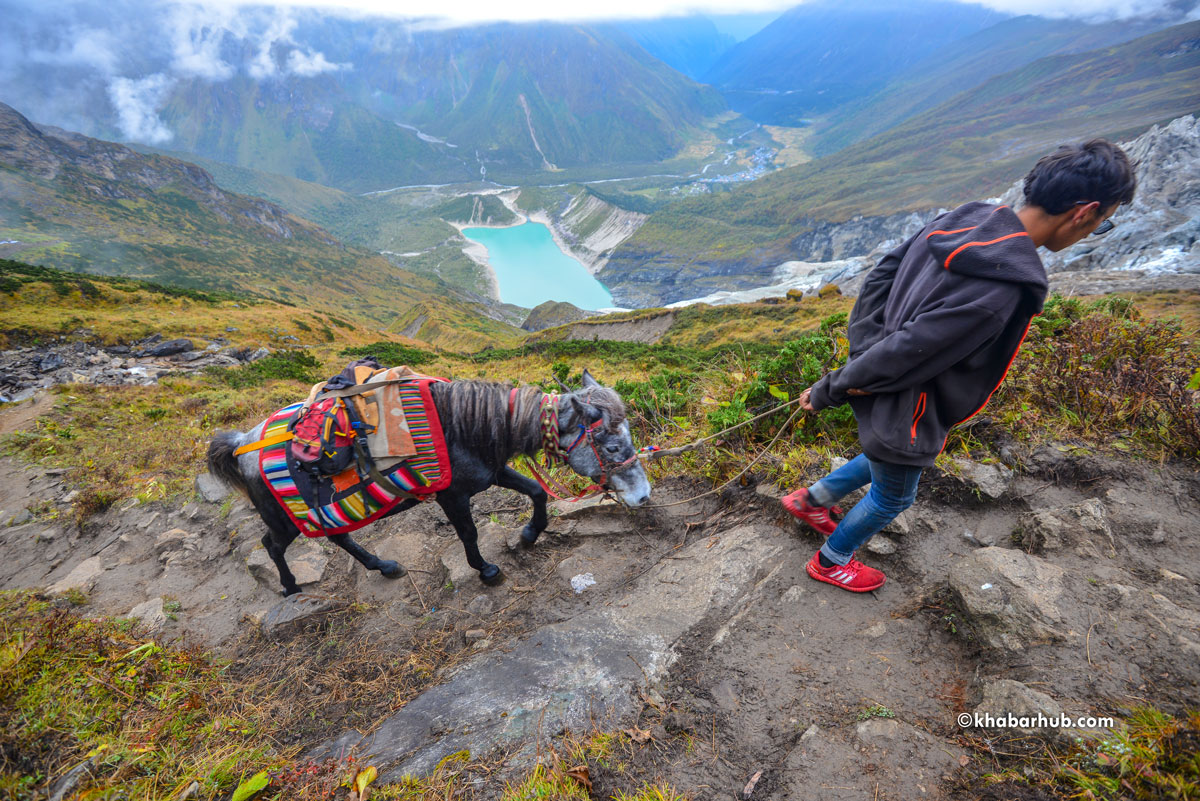
A man with a mule heading toward Manaslu basecamp (4800m). Donkey and mule are the major transportation means in the Manaslu Region.
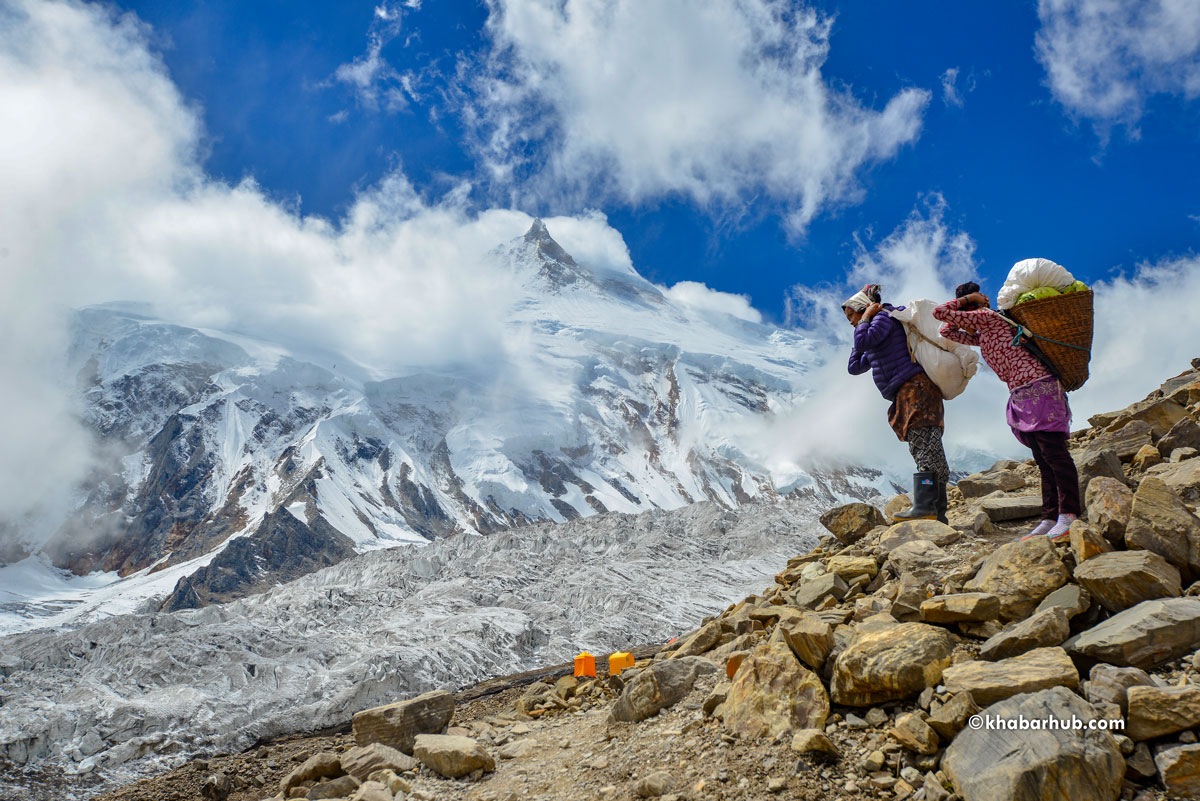
Two local women carrying loads to the Manaslu Base Camp.
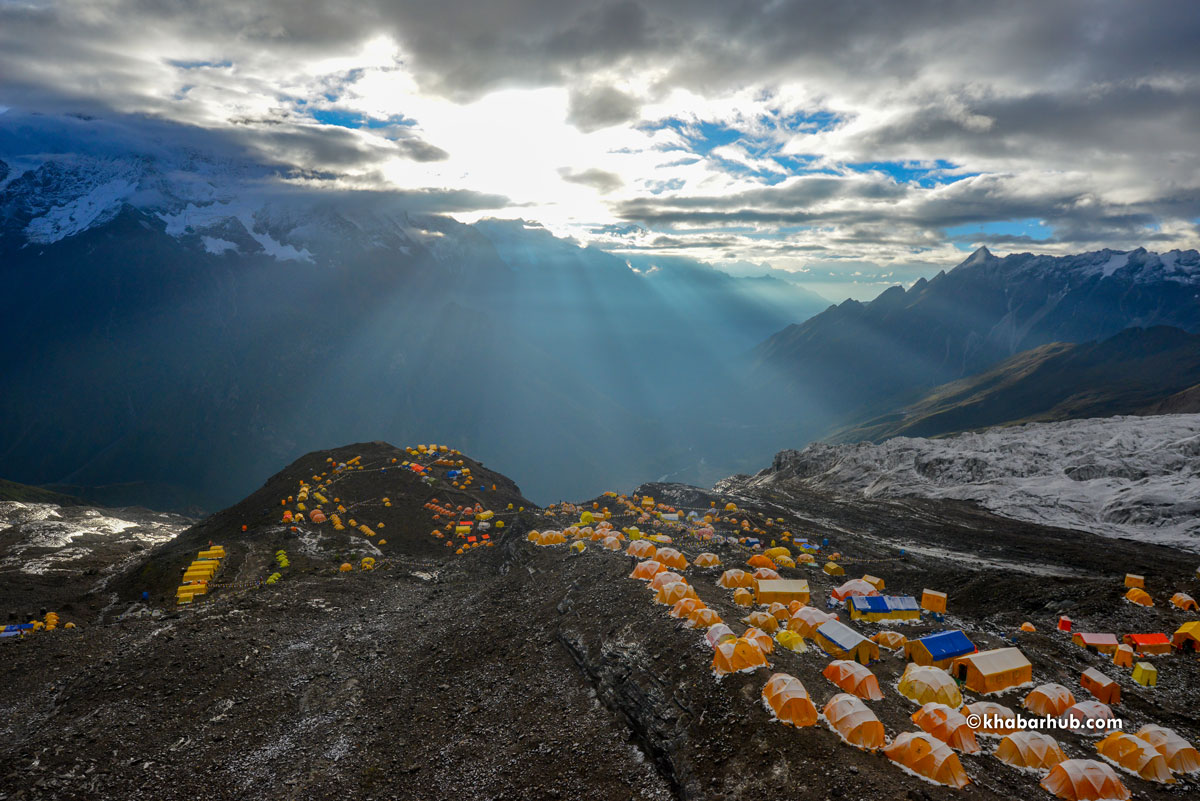
Tents at the Manaslu Base Camp (background is the Panpoche Peak 6620m). Climbers stay at the basecamp using tents for more than 30 days during the entire expedition. Each year more than 500 climbers climb the peak.
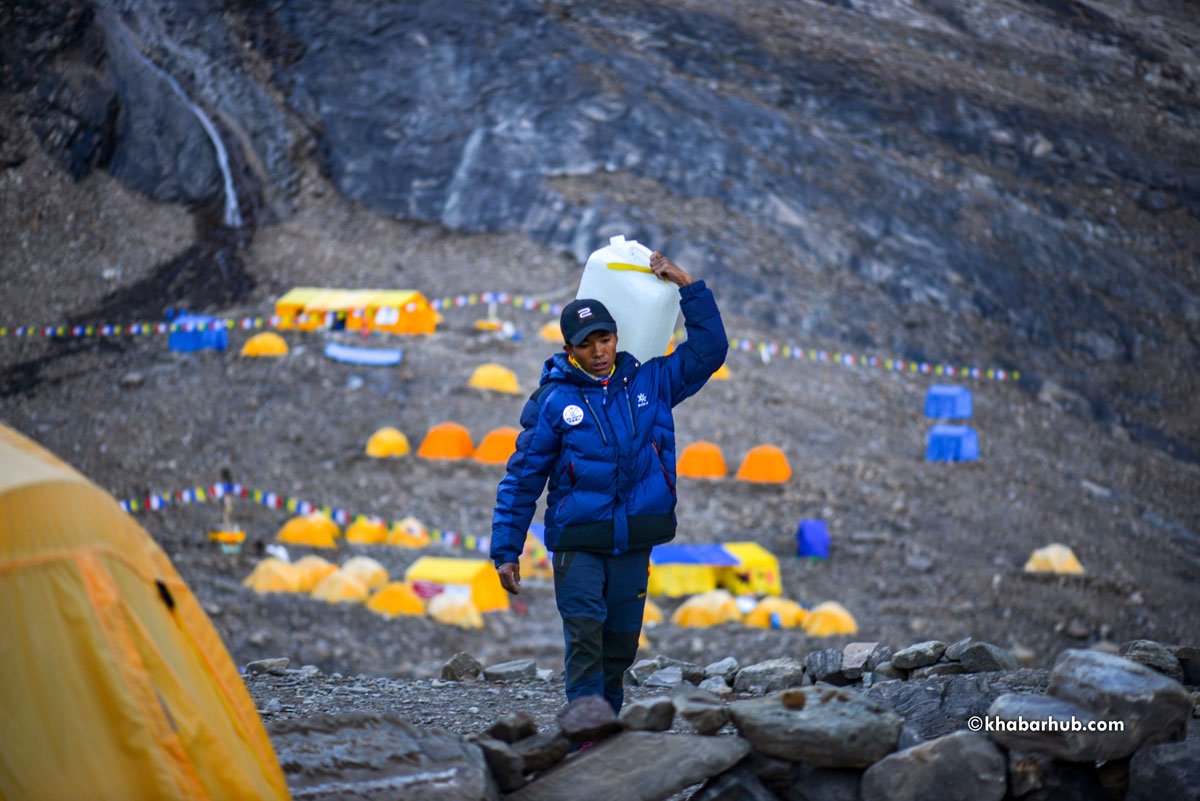
Man carry water from the source of melting ice at the basecamp.
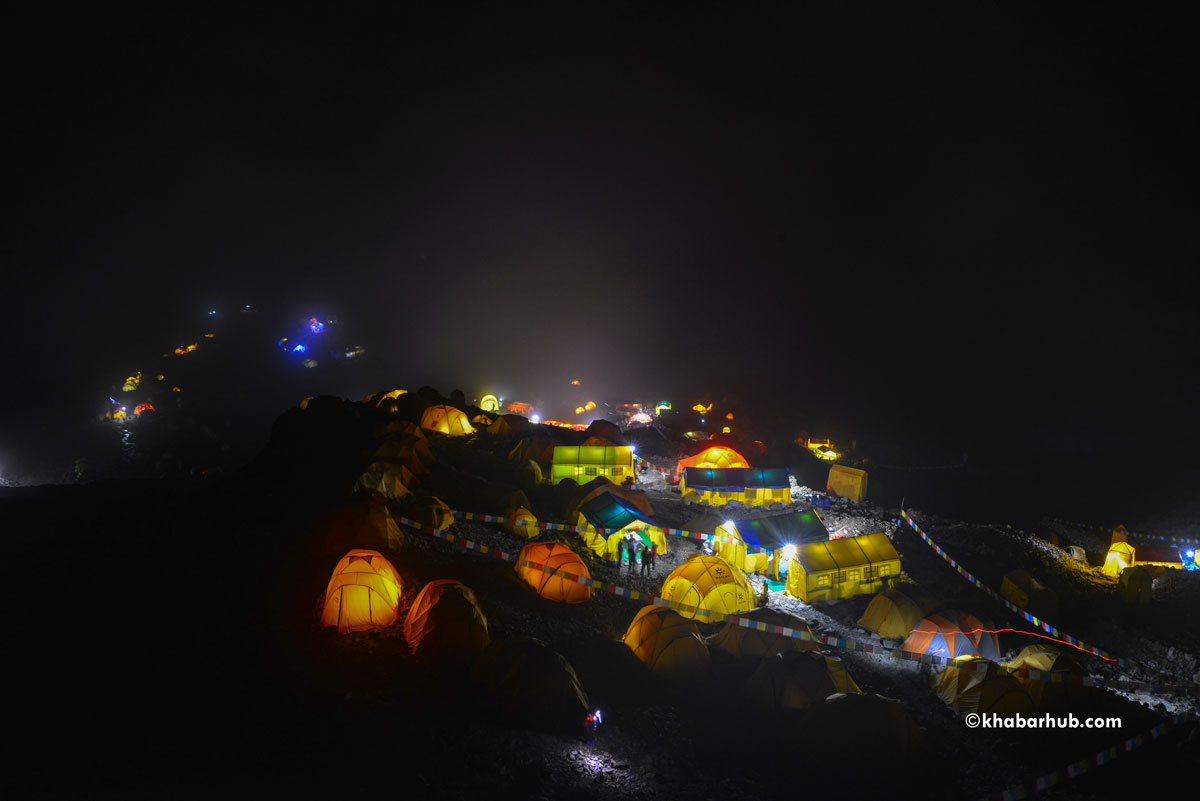
Lit up tents seen at the basecamp of Manaslu (4800m)
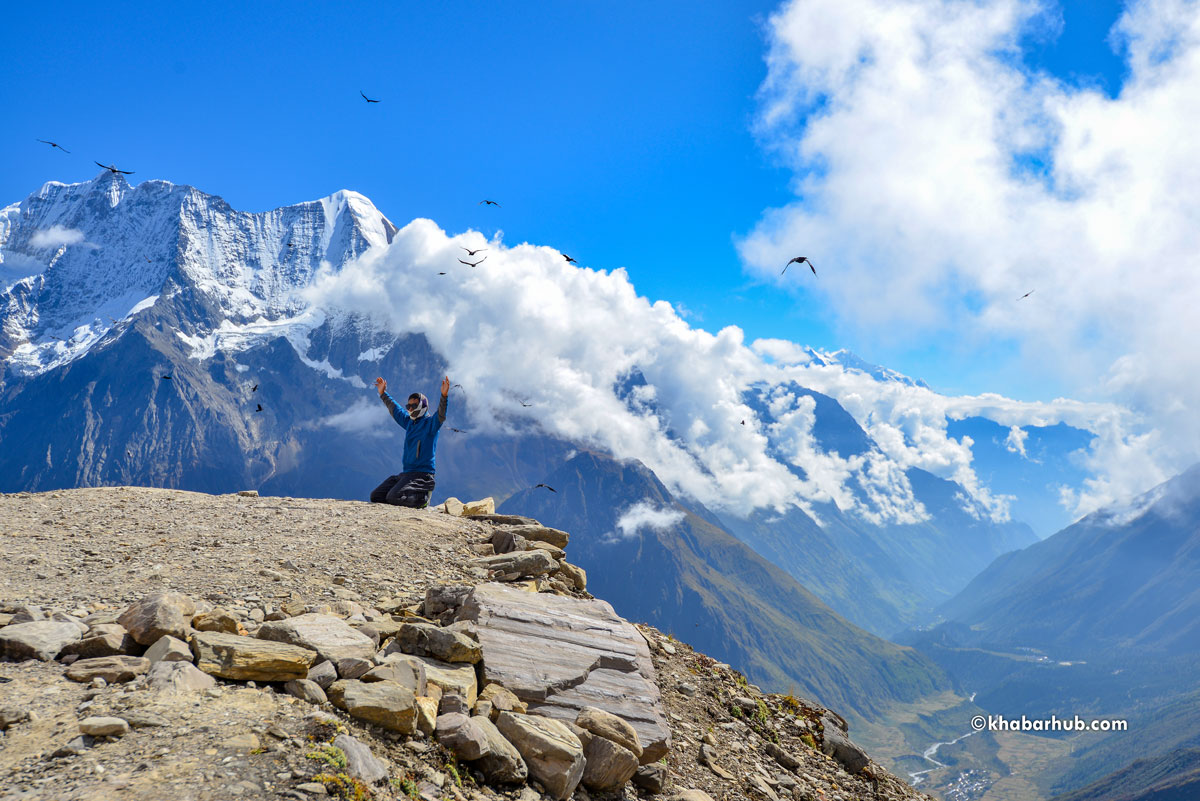
Man Marshaling helicopter at the basecamp. Some of the climbers chose to return to Kathmandu by helicopter after the climb. Helicopters are also used for rescue operations.
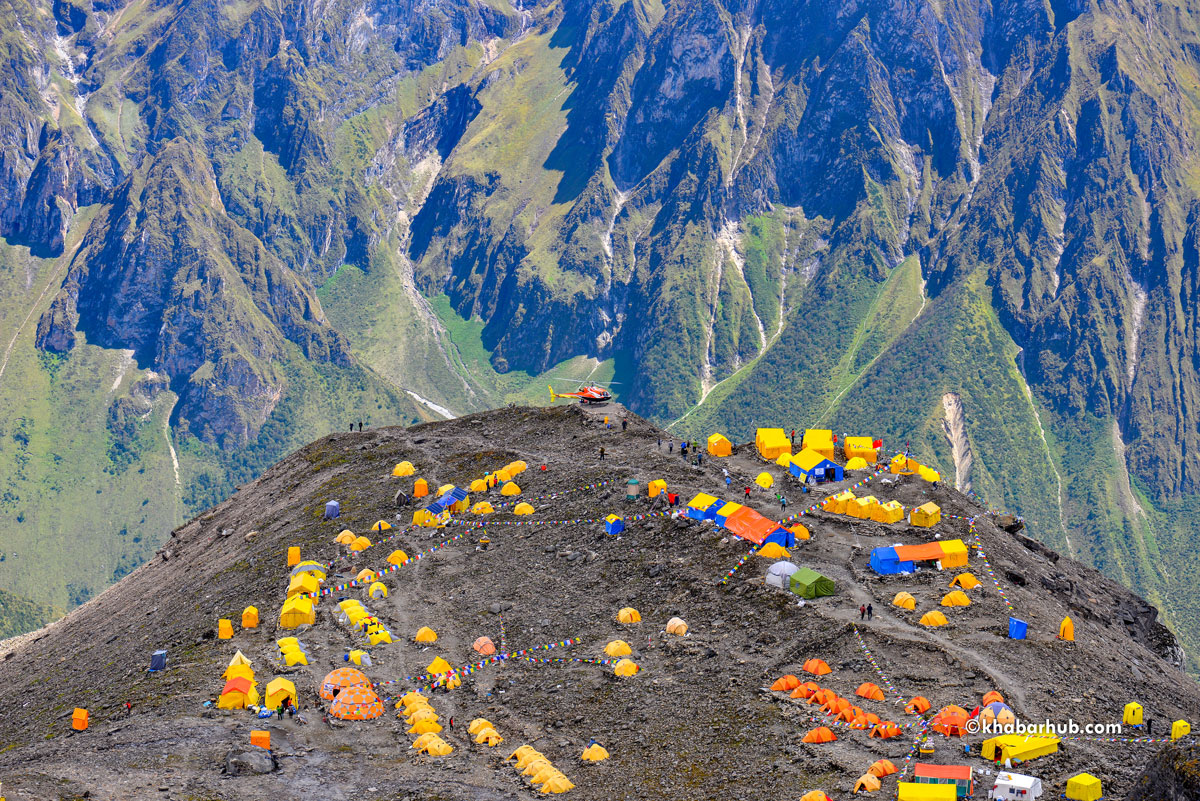
A chopper is seen at the Manaslu Base Camp.
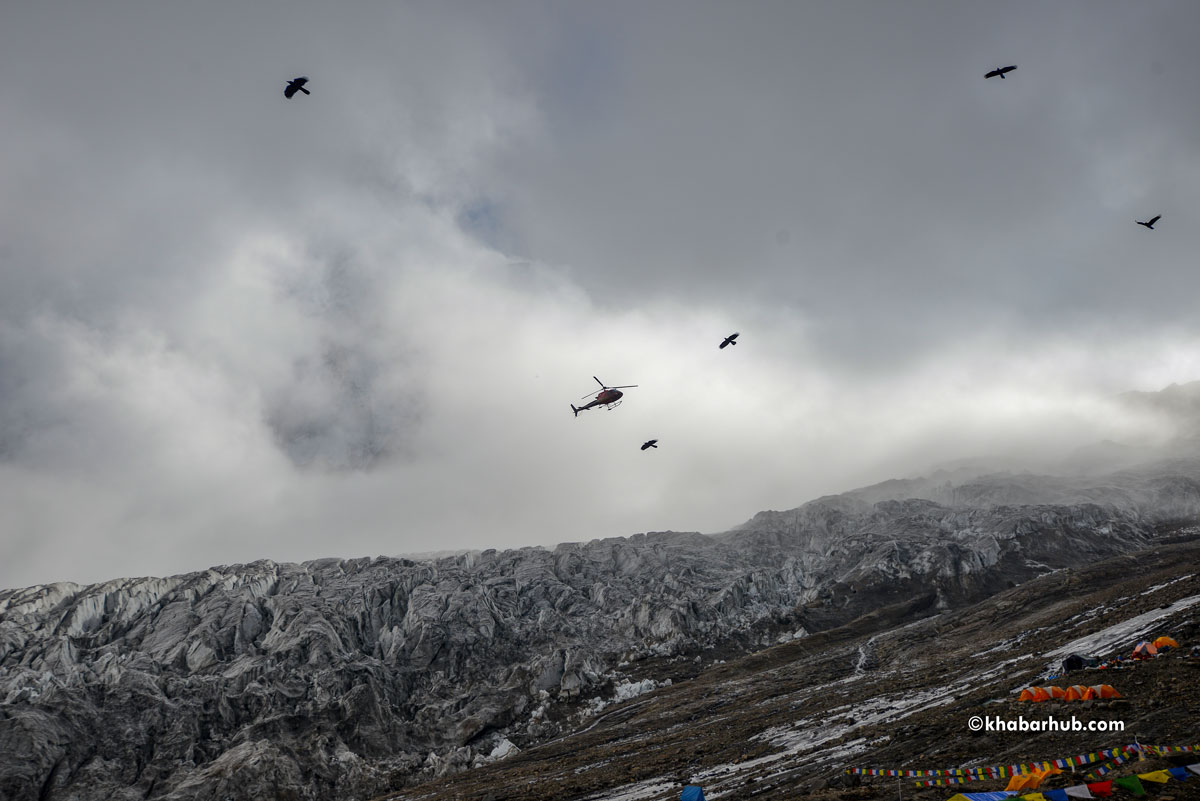
Helicopter and crows at the basecamp.
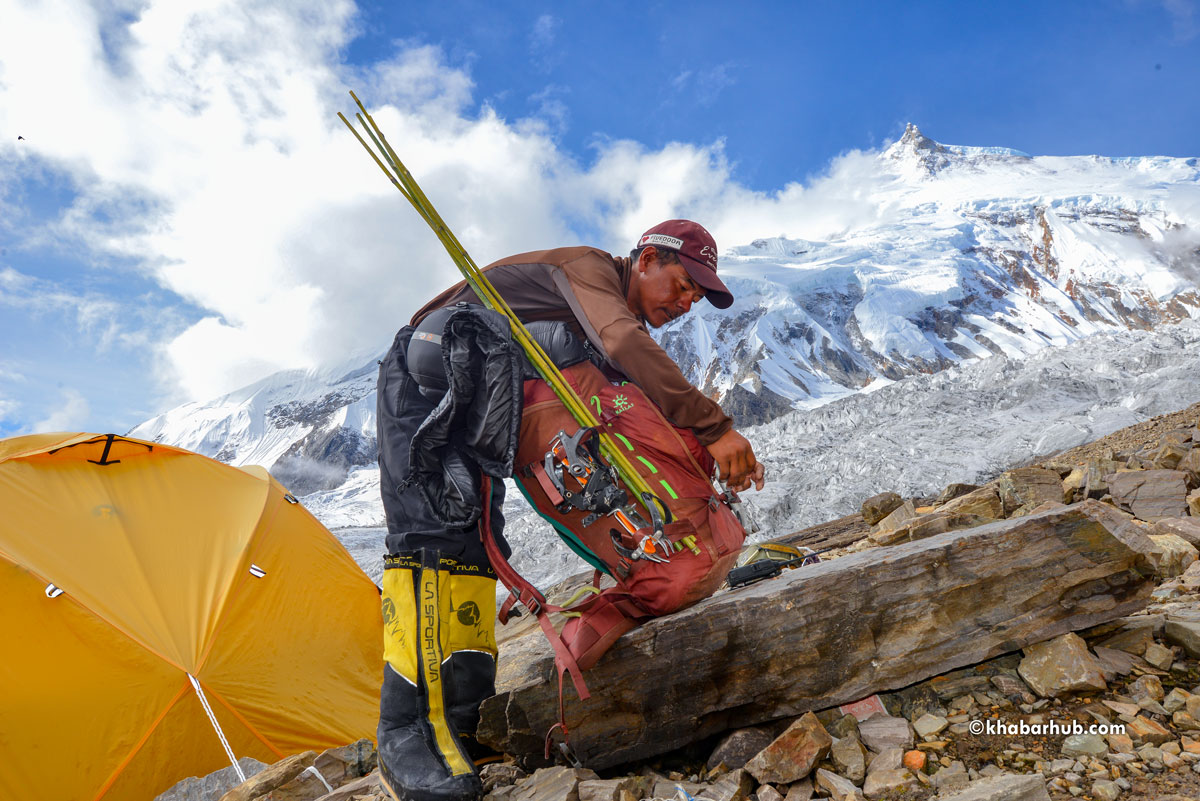
Sherpas preparing to go to the higher camp.
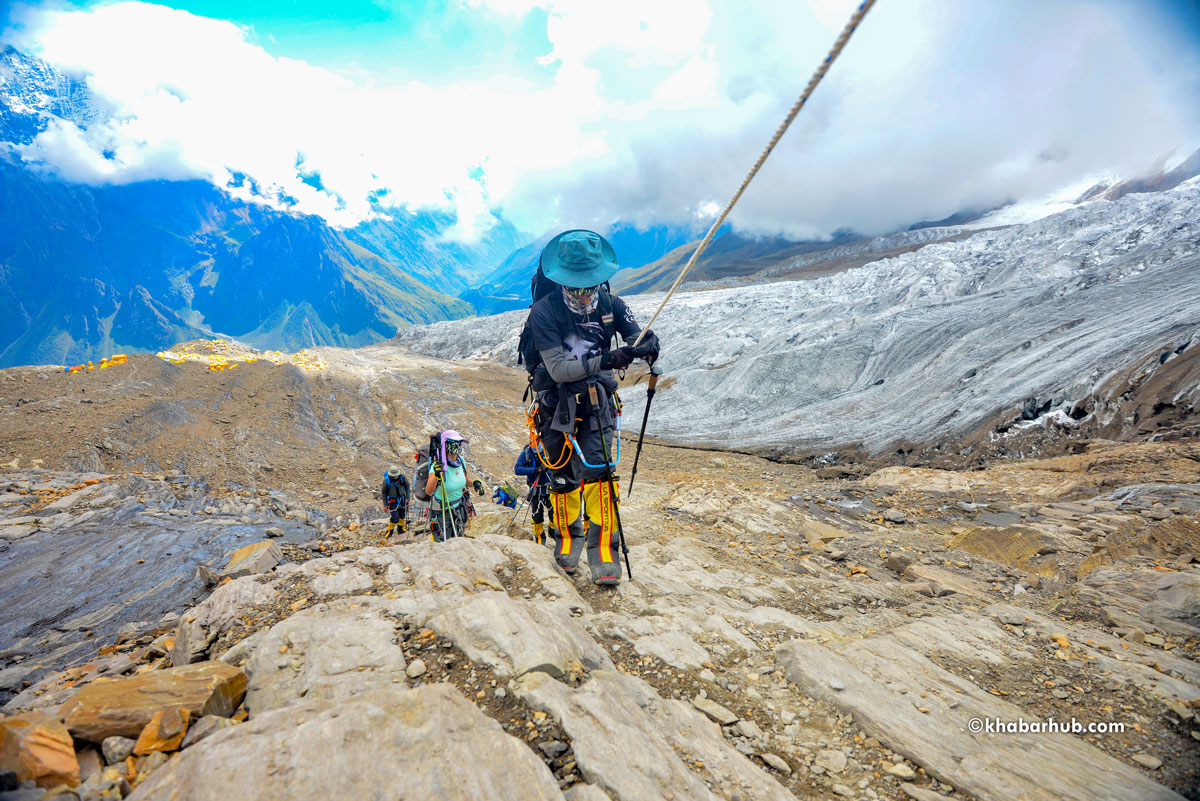
Climbers hiking towards Camp I from the base camp.
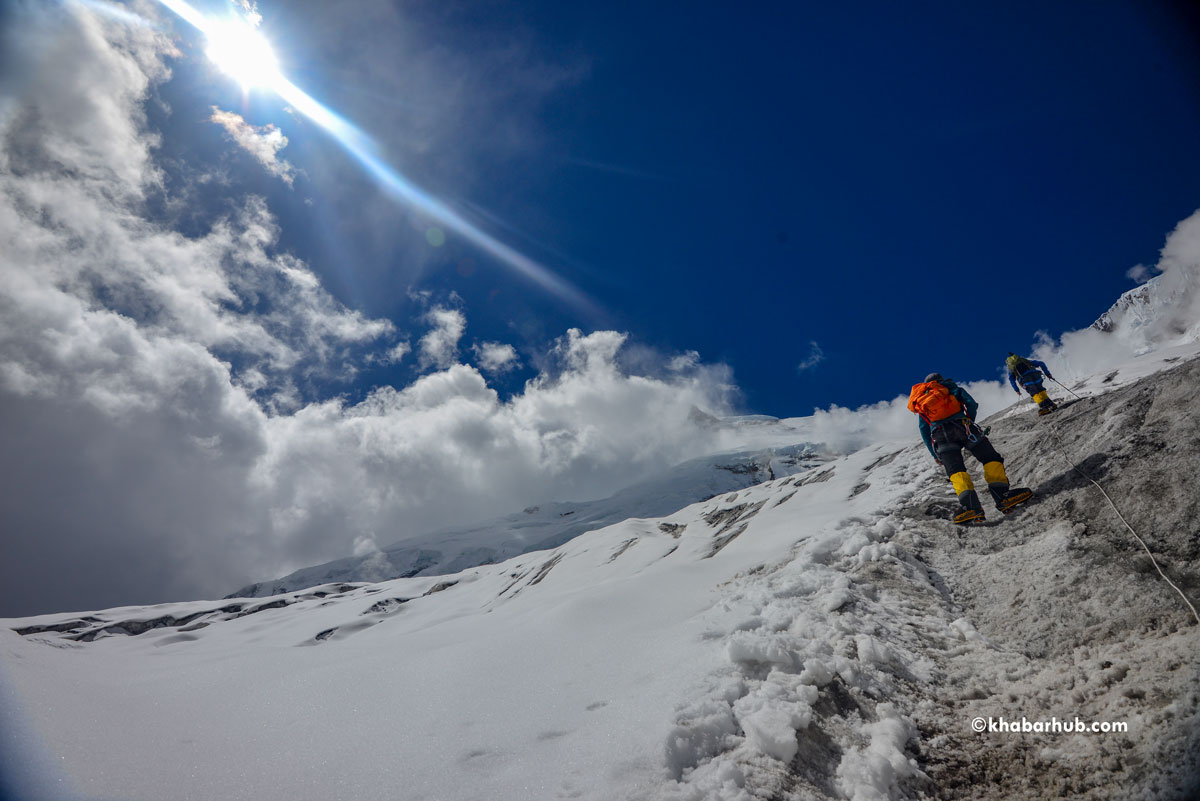
Climbers on the way to Camp 1.
KATHMANDU: A total of 22 mountaineering tourists were rescued in December, January and February, according to the Department of Tourism (DoT). Of them, 12 tourists were rescued in December from different parts of Nepal.
Most of them were rescued from the Mt. Everest Circuit route. Similarly, 6 tourists were rescued in January and 4 tourists in February. However, rescue reasons were cited only in the case of the 7 rescued tourists. Reasons include diarrhea, high altitude and heavy snow.
The government is gearing up to celebrate 2020 as Visit Nepal Year. Tribhuvan International Airport (TIA) is a major gateway for international tourists visiting Nepal. Management of TIA is crucial since the first impression is the last impression. Raj Kumar Chhetri, General Manager at TIA is working to give the airport a facelift. Khabarhub caught up with Chhetri. Excerpts:
There are a lot of complaints on the poor state of things at TIA. How are you dealing with those?
I am in the aviation sector for the past 30 years. Thus, I am familiar with the problems facing TIA. When we talk about international airports, we have an image of huge and sophisticated airports in developed countries. We do not have an adequate budget to develop huge infrastructures. Yet, I am trying my best by managing the resources we have.
Given the limited budget, I am working on a way to draw the attention of the tourists in a different manner. I am emphasizing on our unique culture and tradition.
TIA toilets used to be stinky, we made them neat and clean. Also in the past, passengers were disappointed in the lack of drinking water and adequate sitting facilities. Those problems exist no more.
I am also working to install air conditioners in the domestic and international lounge of the airport. Alongside, construction works are on to scale up the TIA infrastructure.
What have you done at the airport as part of welcoming foreign tourists?
Given the limited budget, I am working on a way to draw the attention of the tourists in a different manner. I am emphasizing on our unique culture and tradition. I have designed and decorated the airport the way we welcome guests as per our tradition. This has enchanted visitors.
We have used copper pitchers full of water with flowers on the tops. Walls are decorated with pictures that resemble our culture and tradition. We have also placed a statue of Garuda to welcome tourists. It is in fact, loved by many and people take a selfie with the statue. All these have come at the cost of mere Rs. 5,00,000. These small things have remained impressive to international tourists since these are new sights to them, uncommon at sophisticated airports.
What about the parking problem?
Parking is not a big issue as was in the past. Previously, it was messy. Even pick picketers roamed freely at the mismanaged parking lot. Taxi drivers forced passengers into their vehicles, dragging them. The situation now is different. Yes, the parking lot is a bit distant from the airport. However, you have trolleys to carry your goods from the well-managed parking lot up to the airport.
We are also starting pick and drop service soon so that passengers are directly led to the parking area from the plane.
You once talked of a boutique airport. What does that mean?
By a boutique airport, I mean a modern airport reflecting original traditional and cultural traits. We are been working on it. As part of a short term plan, we are housing a one-horn rhino at the airport within two weeks. That shall give it a distinct look for the tourists. Besides, the airport also has long term projects in developing its infrastructure.
There have been reports of disrupted flights due to cracks on the runway during monsoon? How are you dealing with the problem?
Problem with the runway is true. Now, we are repairing the runway with new materials. This work will be over in three months. We are also working on the taxiway. The airport is getting rid of this problem, soon.
Is TIA becoming a transit point for criminals as rumored?
I cannot tell you what transpired at TIA before my tenure. But after I assumed the position, crime-related activities here have come down by 80 percent. We are serious about the security issue. We hold security meeting once a month that is attended by officers from the revenue office, terminal office; and the police and army. We are frequently updated on the security situation here.
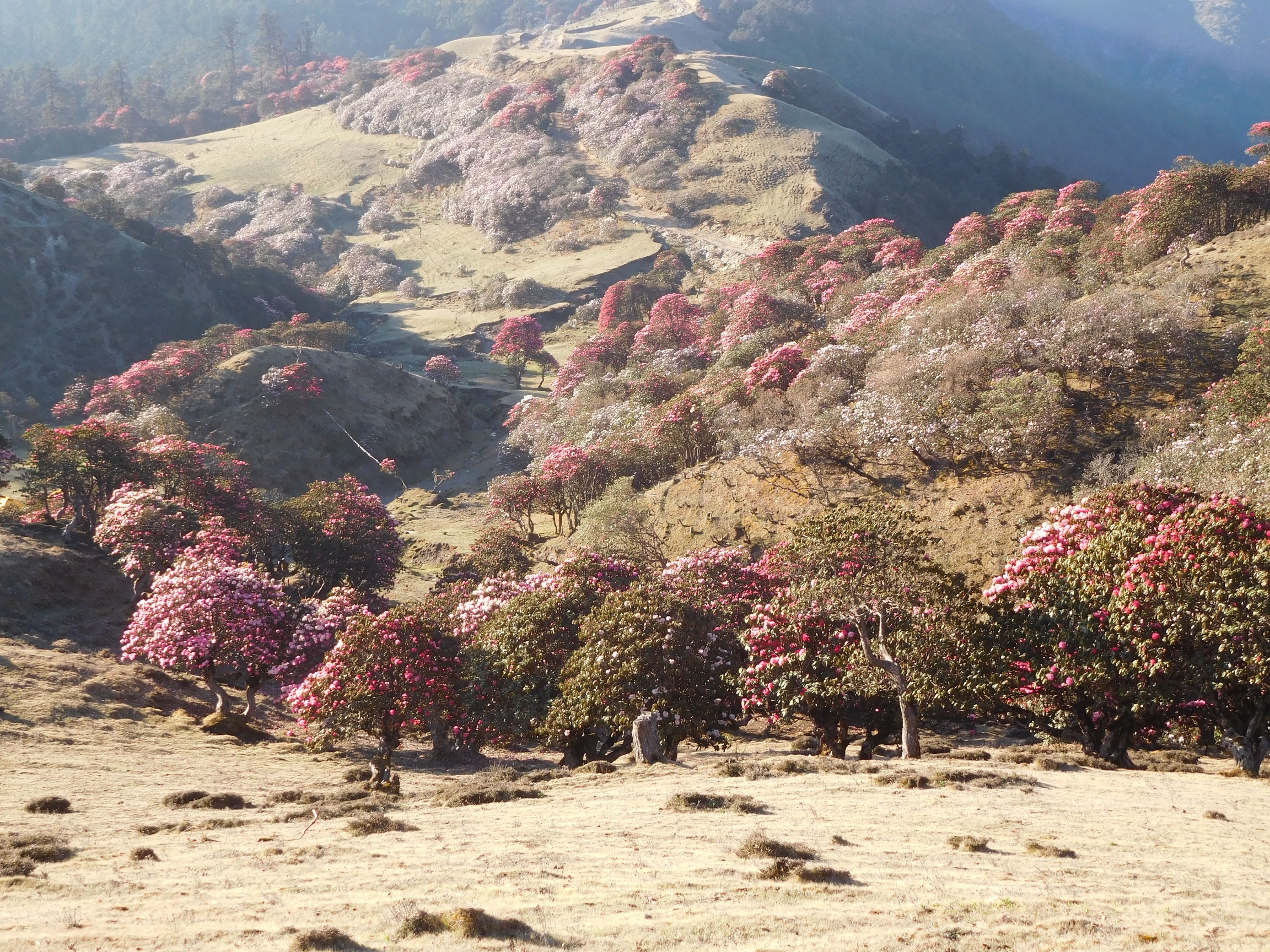
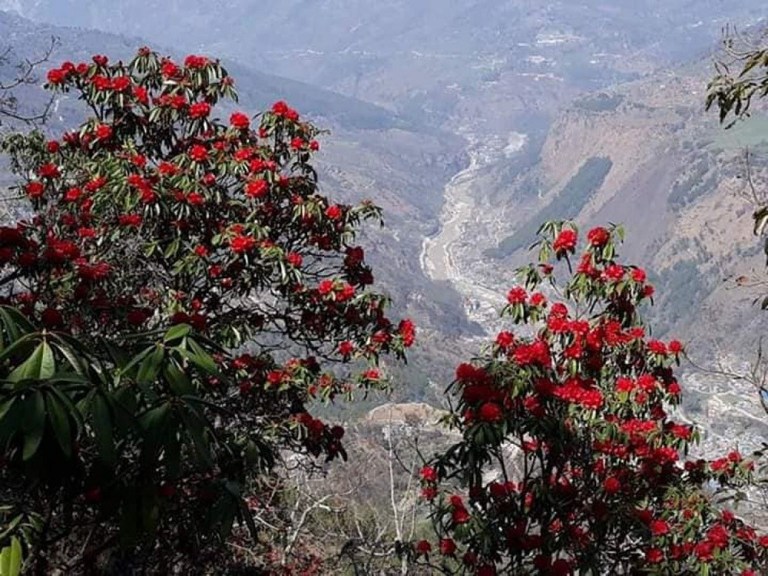
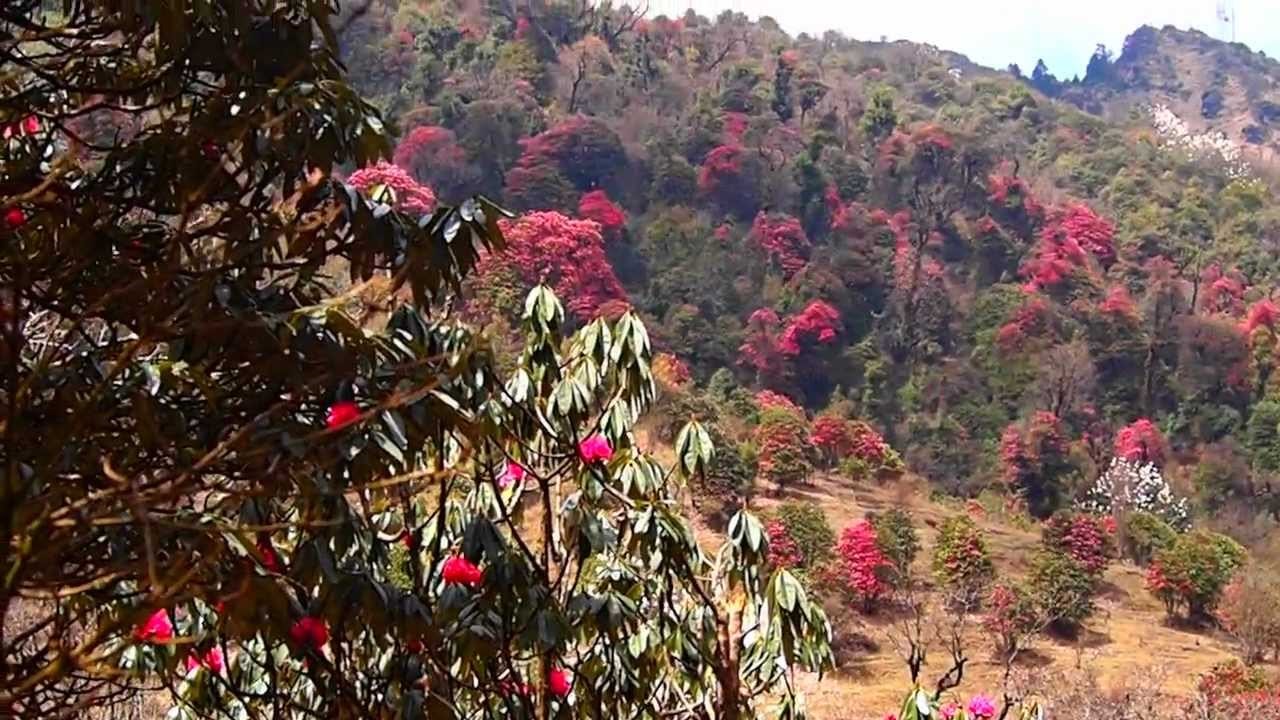
KATHMANDU: When rhododendron trees are in full bloom with the advent of the spring season, their aromatic flowers create red blotches on the white and green hills of Taplejung district.
It blooms along the swathe of hilly region of the country stretching from Taplejung in the east to Dadeldhura in the far-west.
The flowers bloom to the fullest during mid-March to mid-May with the backdrop of the mountain range, appealing to the eyes of both domestic and foreign tourists.
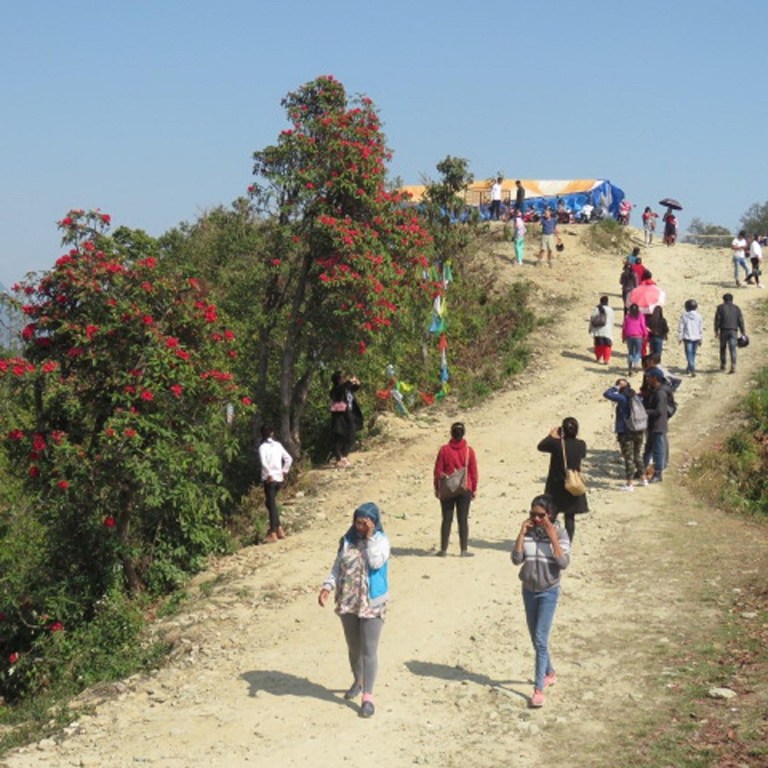
A large of number of domestic tourists capturing images of rhododendron flowers on their cameras at Kahundanda in Pokhara Metropolitan City-11. (RSS)
Rhododendron arboreum is an impressive tree species of rhododendron that grows as tall as 20 meters with brilliant red flowers. According to Dr Yadav Upreti, a researcher, a total of 33 species of rhododendron flowers available in Nepal, 30 species of rhododendrons are found in Province 1 alone. They are found in Taplejung, Panchthar, Ilam, Tehrathum and Shankhwasabha district at the altitude between 1,200 meters and 3,600 meters.
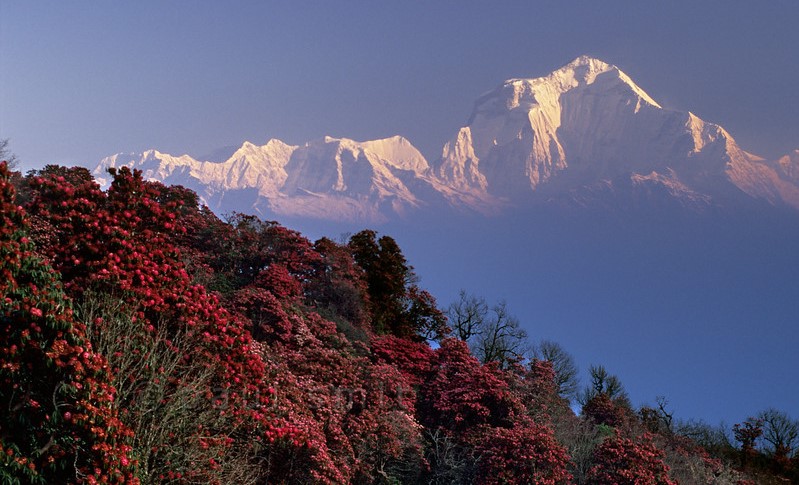
Similarly the rhododendrons bloom in Kaski, Myagdi, Baglung in the west and Dadeldhura in the far-west. They are found in red, purple, and pink and while colors.
The rhododendron is not only popular for its beauty but is also adored for its medicinal value. It is also used for making pickle and alcohol as well.
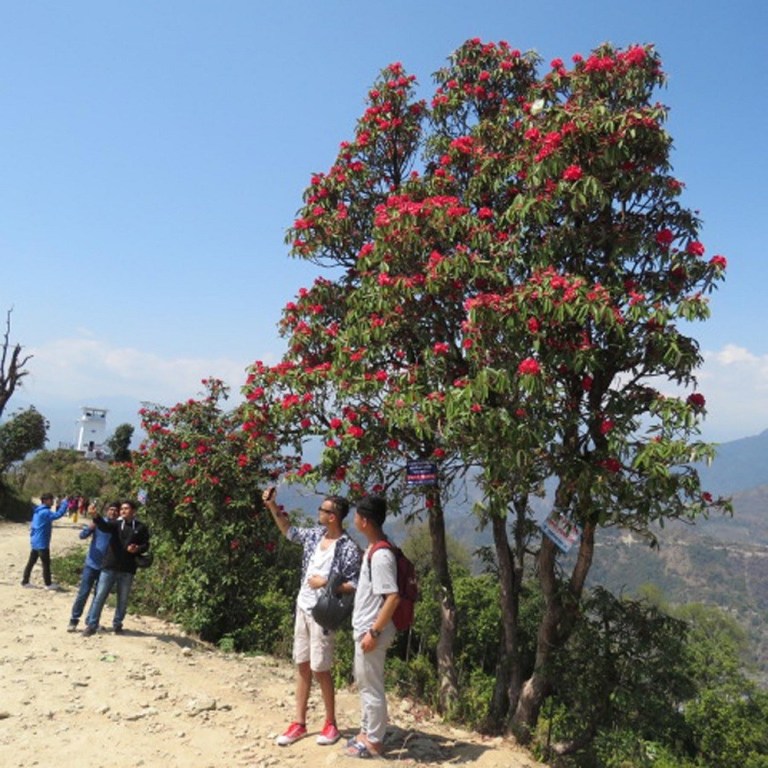
Domestic tourists taking a selfie at Kanhudanda of Pokhara Metropolitan City-11. (RSS)
It is high time that domestic and foreign tourists started thronging hills to savor the beauty of rhododendron flowers, with the backdrop of the snow-capped mountain range in Nepal.
KATHMANDU: Government declared 2020 as the Visit Nepal Year with the objective of boosting tourism in Nepal. Everest, the highest snow-capped mountain in the world is the major tourist attraction in the country.
However, thanks to the impact of the climate change, the Everest may not be as appealing due to increasing rate of melting snow. Garbage piled up in the Everest pose another biggest threat to its survival.
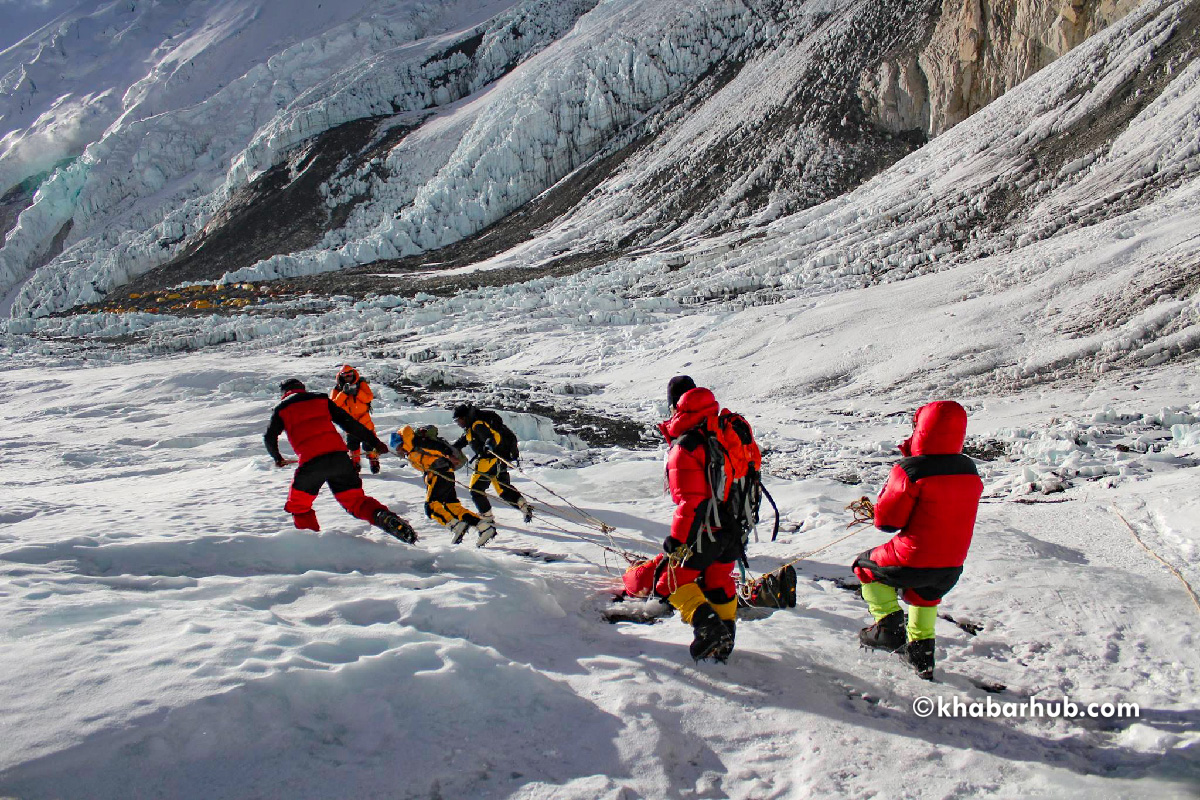
Not only for the mountain climbers, around 50 percent of tourists visit Nepal to have the glance of the snow-capped Himalayas, according to a data maintained by Nepal Tourism Board (NTB).
However, these Himalayas may not retain the same alluring look thanks to snow melting as an impact of the global warming, according to PK Sherpa, a tourism entrepreneur and a mountain climber.
Sherpa has been running a campaign to clean the Everest since 2010. As of now he collected six dead bodies as well as a huge amount of garbage scattered in around the Everest, according to PK.
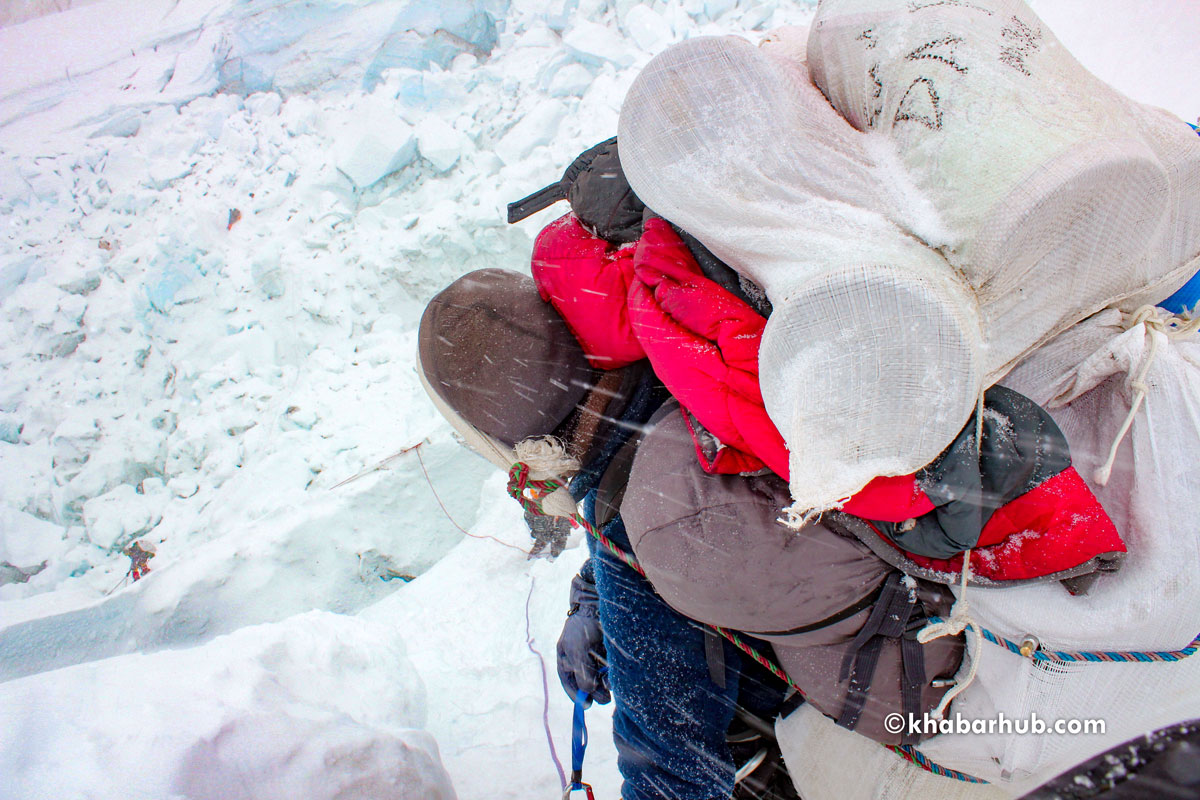
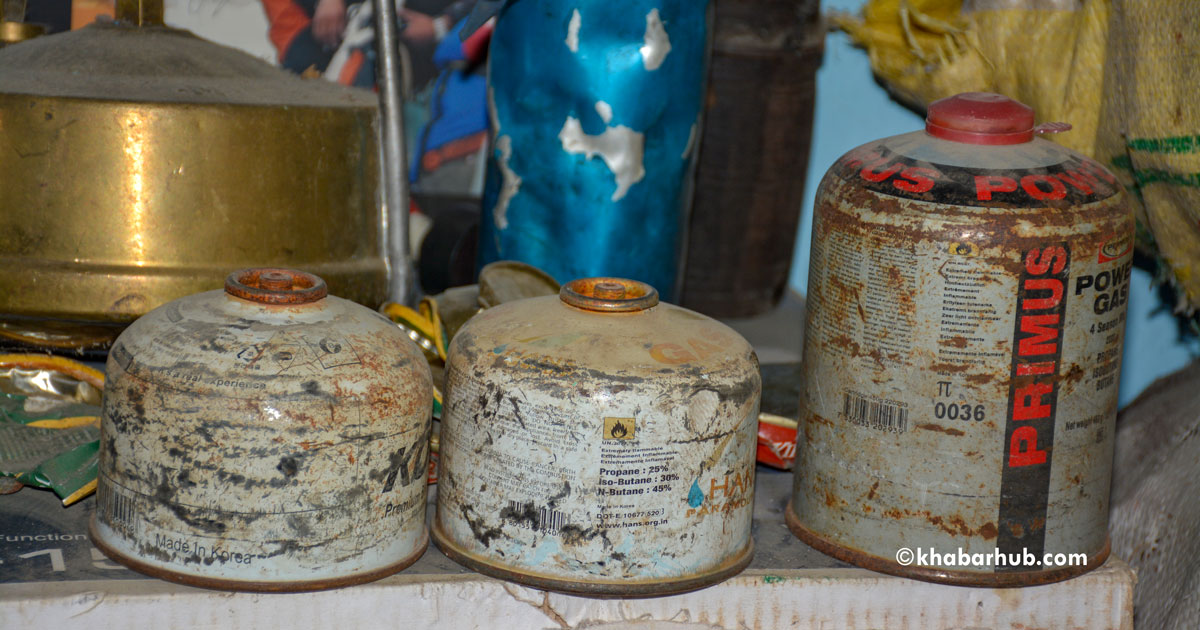
Garbage types in the Everest
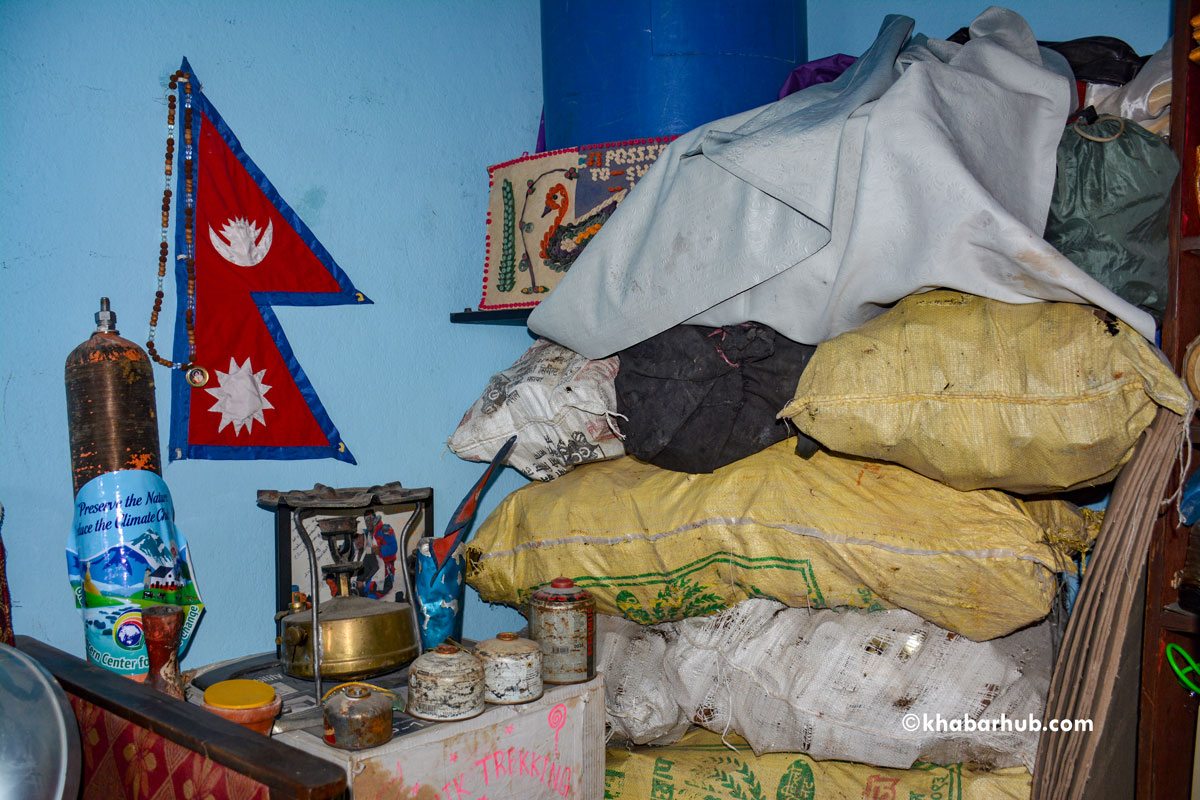
Climbers are the main source of pollution in the Everest. Since everybody is conscious to save his/her life, they throw away anything that is a burden. Besides, some climbers die in terms of the climb. Garbage since the first human successful attempt to conquer the Everest in 1953 remain piled up in the Everest. Beside dead bodies, garbage in the Everest include food packages, can bins, oxygen cylinders, EP gas, tents among others.
Everest is getting ugly
Even as the Everest still casts a majestic spell from a distance it is getting less charming to the climbers. Layers of garbage piled up in the Everest is getting visible due to melting snow. Sagarmatha Pollution Control Committee is working to clean the Everest. However, its activities are focused on the base camp only.
It is of urgent need to clean camp-2, camp-3 and camp-4 of the Everest, according to Sherpa. “Around 15 to 20 tons of the garbage remain piled up on the Everest above its camp-2. Even a regular cleaning will take some 10 years to rid Everest of the garbage,” says Sherpa.
In his first Everest cleaning campaign PK and his team comprising 20 members had collected five bodies and 18 tons of the garbage. Nepal Mountaineering Association in 2011 had collected over three ton garbage. It was at that time that Sherpa had collected one dead body from the Everest.
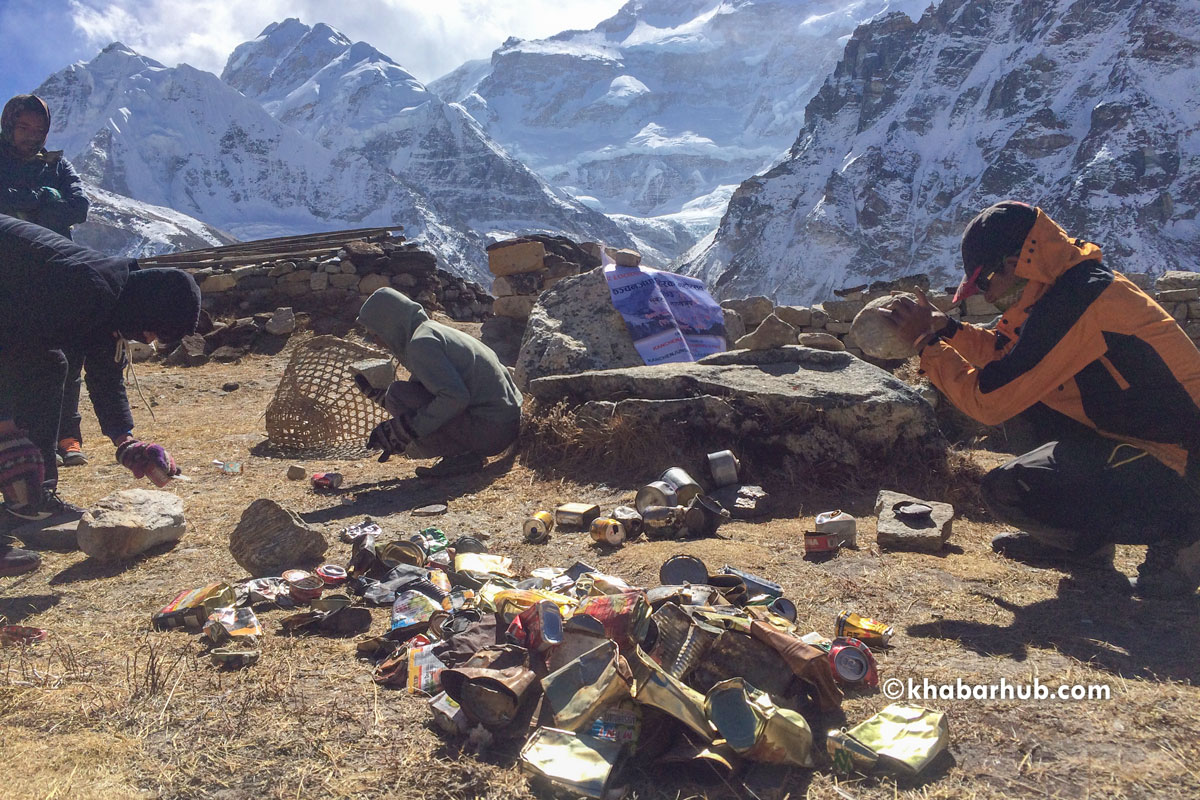
Sherpa who is after the Everest cleaning campaign plans to construct a museum out of the garbage materials collected from the Everest.
Cost incurred in scaling the Everest
The cost for climbing any Himalayas including the Everest is different for Nepali and foreign nationals. For Nepalese nationals, the cost comes to around Rs. 1,500,000 to Nrs. 5,00,000. If people climb the Everest, the cost shared by a person becomes low.
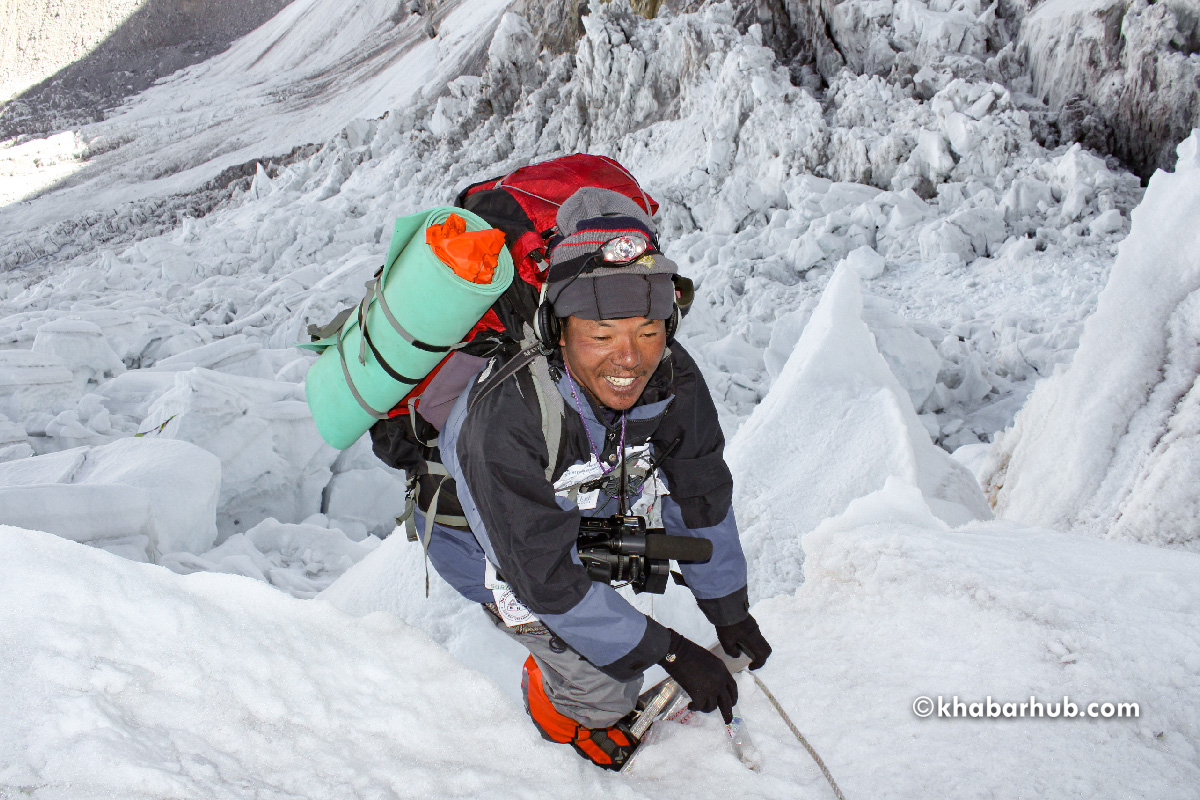
That is, if one climbs the Everest in a group of 10, per head cost comes to around Rs.10,0000 to Rs. 1,50,000.
KATHMANDU: Basantapur is one of the most favored tourist destinations in the historic Kathmandu valley.
The country has seen an influx of over 200,000 tourists in two months alone, a 33 percent up as compared to the same period last year, according to the Department of Immigration. Altogether, 216,214 tourists visited the country in January and February (91,793 in January and 97,694 in February).
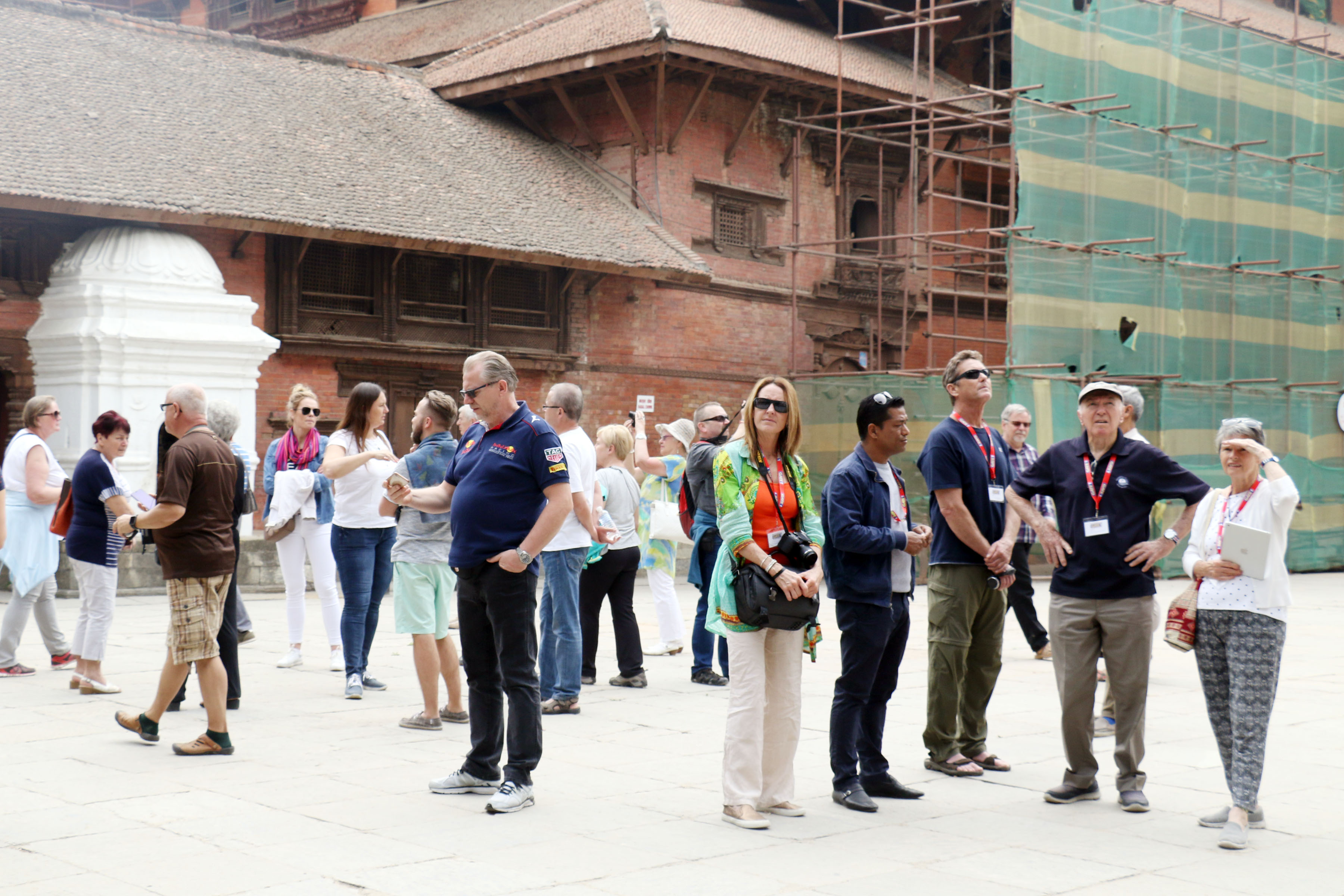
Photo: RSS
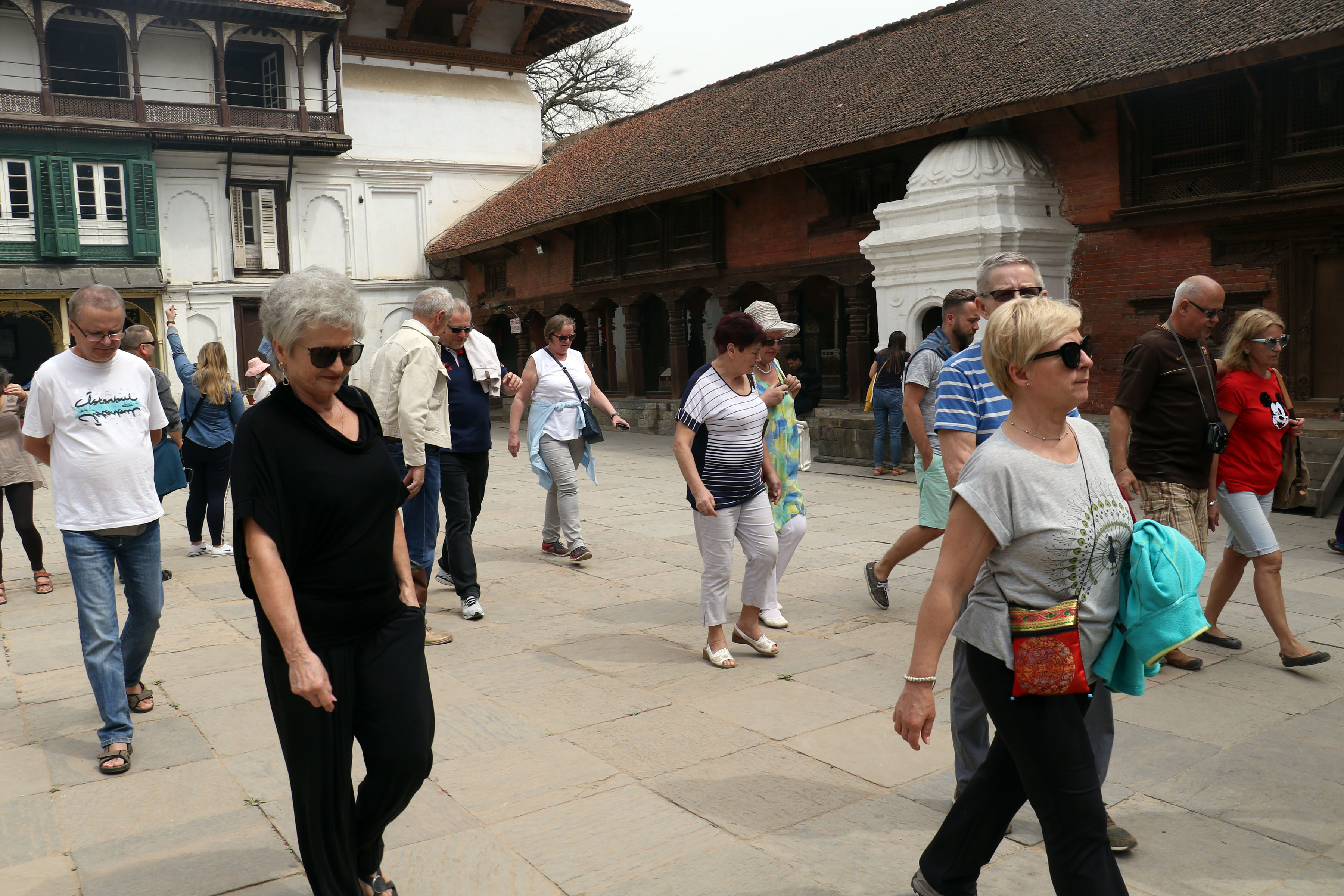
Photo: RSS
KATHMANDU: View of Mt. Annapurna from Kothe Khola Rural Municipality -3, Dhamja, Baglung. Mt. Annapurna is the tenth highest mountain in the world at 8,091 meters (26,545 ft) above sea level.
Annapurna is a massif in the Himalayas in north-central Nepal that includes one peak over 8,000 meters, 13 peaks over 7,000 meters and 16 more over 6,000 meters.
The massif is 55 long, and is bounded by the Kali Gandaki Gorge in the west, the Marshyangdi River in the north and east, and by Pokhara Valley in the south. At the western end, the massif encloses a high basin called the Annapurna Sanctuary.